5 Clothes Organization Tips & Ideas: Hangers, Drawers, Shelves & More
Table of Contents
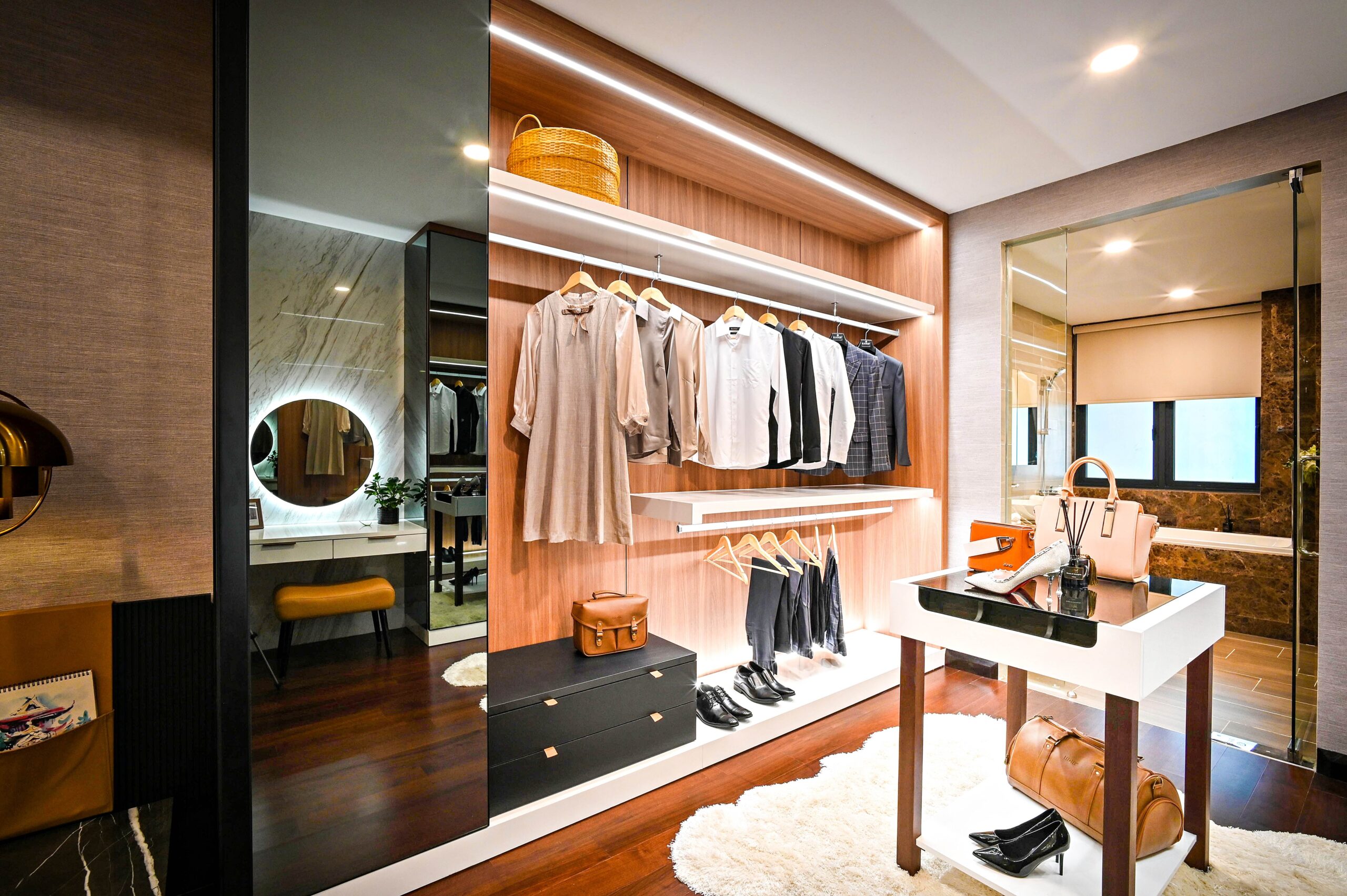
Getting dressed shouldn’t require a search operation. When clothes have no clear home, such as mixed types on a single rail, drawers that turn into piles, and accessories that end up anywhere, you spend time looking instead of choosing.
These five clothes organization tips are practical, not aspirational. Each one targets a specific habit or structural issue that causes wardrobe chaos, with specific Amazon product recommendations for anyone who wants a physical fix rather than just a method.
Products in This Guide at a Glance
| Product | Tip | Key Feature | Best For | Price |
|---|---|---|---|---|
| Zober Velvet Hangers 50-pack ⭐ | Hangers | Non-slip, slim, matching set | Instant visual order + more rail space | $ |
| Amazon Basics Non-Slip Hangers | Hangers | Budget, non-slip, bulk set | Budget-friendly full replacement | $ |
| Pinkpum Stackable Shelf Baskets | Shelves | Stackable, foldable, clear | Folded items on open shelves | $$ |
| Foldable Drawer Organizer Bins | Drawers | Foldable, fabric, multiple sizes | Socks, underwear, accessories | $ |
| Stackable Wardrobe Shelf Organizers | Shelves | Stackable, adds vertical tiers | Maximizing shelf storage | $$ |
| Tuffen Over-the-Door Organizer | Door space | Multi-pocket, no-drill, over-door | Accessories, small items | $ |
| Scarf & Accessory Organizer | Door space | Hanging, multiple loops, space-saving | Scarves, belts, accessories | $ |
| VTRIN Vertical Shoe Organizer | Space | Vertical hanging, dustproof pockets | Shoes in tight closet spaces | $ |
5 Clothes Organization Tips
Tip 1: Sort by Type and Colour
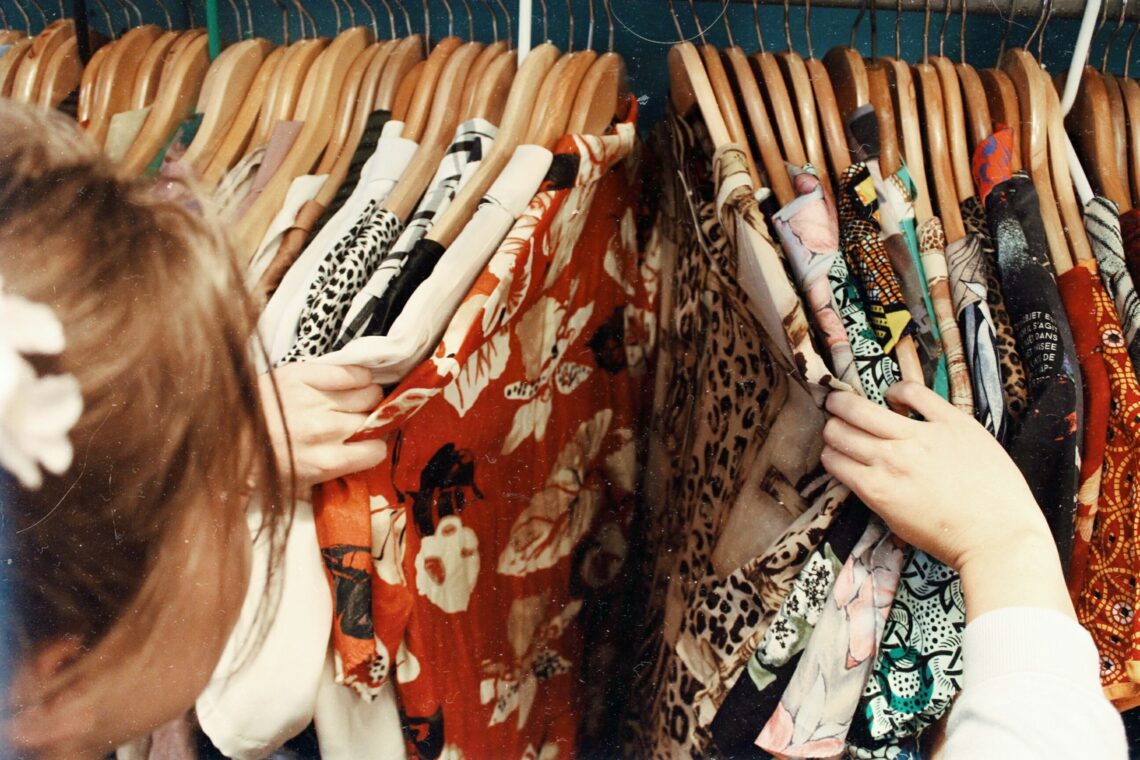
Sorting your clothes by type first, like tops together, bottoms together, dresses together, and outerwear together, makes a bigger difference than most people expect. Instead of scanning the entire rail to find a specific item, your eye goes straight to the right section.
Colour-coding within each category is the second step, and it’s optional but genuinely useful. When everything is in its place by type and colour, you also start to see what you actually wear versus what just takes up space. Items that never move become obvious (and that’s often the most useful thing clothes organization can do for you).
Tip 2: Use Hangers
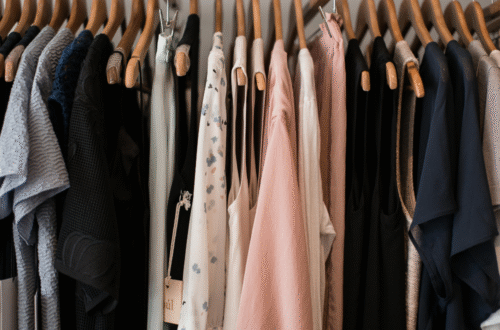
Mismatched hangers are one of the main reasons closets look chaotic, even when clothes are technically organized. Different thicknesses, different heights, different widths: they prevent clothes from hanging at the same level and make the rail look cluttered regardless of what’s on it.
Switching to a single type of slim velvet hanger does two things immediately: it makes the closet look significantly more ordered, and it frees up rail space. Velvet hangers are about a third the width of standard plastic ones.
The non-slip surface also means delicate items like silk or knitwear stay where you put them instead of sliding off. A 50-pack covers most standard wardrobes completely.
Tip 3: Utilize Shelves and Drawers
The rail handles everything that needs to hang. Shelves and drawers should handle everything else — and the key is giving each category its own zone rather than letting items mix.
Drawers work best for small, soft items: socks, underwear, t-shirts, loungewear, and activewear. Fabric organizer bins inside the drawer create compartments without any installation. Shelves work for folded heavier items: jumpers, jeans, bags, and accessories.
Stackable shelf baskets add a second tier to any shelf, effectively doubling the storage without adding any more furniture. If you have items that belong in neither category (seasonal pieces, spare bedding, occasional-use accessories), they should move out of the main closet zone entirely, not compete for everyday shelf space.
Tip 4: Hang by Frequency of Use
Eye-level is prime real estate in a closet. Whatever you hang there, you’ll see first and reach for most easily. Those should be the clothes you actually wear, the pieces you rotate through week to week.
Items used less often go higher or lower: occasion wear, seasonal pieces, and formal items. Items worn daily or weekly stay at eye level. This sounds obvious, but most closets do the opposite: the rail is filled with things worn rarely, while frequently used items end up on chairs or the floor because there’s no obvious space for them.
The sorting work in Tip 1 usually reveals which category each item falls into.
Tip 5: Make Use of Space
Most closets have significantly more usable space than they appear to. The inside of the door, the space above the rail, the wall beside the hanging area, and the floor below short-hanging clothes are all typically empty.
An over-the-door organizer on the back of the closet door turns what’s usually a blank surface into storage for bags, accessories, scarves, shoes, or anything else that doesn’t need to hang on the rail. A hanging scarf and accessory organizer takes items that would otherwise pile up on a shelf and gives each one its own slot.
A vertical shoe organizer uses the door or wall space to keep shoes off the floor without taking up shelf space. Start by looking at what’s currently on the floor of your closet: those items are usually the first candidates for door or wall storage.
Bottom line
These five tips work best when applied in order: sort first, then upgrade the hangers, then address shelves and drawers, then assign frequency zones, then claim the unused space. Each step makes the next one easier.
The products linked throughout this guide are all available on Amazon and cover a range of budgets — from a few pounds for drawer bins to a larger investment if you want a complete hanger replacement. Start with whichever tip addresses the thing that bothers you most and build from there.
FAQ
How do I stop my wardrobe from getting messy again?
The most reliable way is to give every category of clothing a permanent home and not let anything live “temporarily” somewhere it doesn’t belong. When items have clear places to return to, the wardrobe maintains itself with much less effort. Daily habits like hanging things up immediately rather than placing them on a chair make a bigger long-term difference than any single organizing product.
Should I fold or hang everything?
As a general rule, hang anything that creases easily or loses its shape when folded: shirts, blouses, dresses, trousers, and jackets. Fold heavier knitwear and jumpers (hanging stretches them) and fold T-shirts, activewear, socks, and underwear. Jeans can go either way, depending on the rail space available.
What’s the best way to organize a small wardrobe with too many clothes?
Start by removing anything you haven’t worn in the past year. Then switch to slim velvet hangers to reclaim rail space. Move seasonal and occasion-only items to under-bed storage or another location. Finally, use the door and any wall space for accessories and shoes. If the wardrobe is still overfull after all of that, the problem is volume, not organization — and the most effective solution is a further edit of what you keep.
Is colour-coding a wardrobe actually useful?
It’s useful for some people and irrelevant for others. The main benefit is visual — it makes a closet look ordered and helps you spot gaps or duplicates in your wardrobe at a glance. If you find yourself buying similar items repeatedly without realizing it, colour-coding often makes that pattern visible immediately. If you dress more intuitively and don’t plan outfits in advance, the benefit is mainly aesthetic.
Related Reads
- Wardrobe Organization Ideas: Beginner’s Guide (+ 10 Amazon Picks)
- 5 Clever Closet Storage Ideas to Help You Declutter
- Best Wooden Hangers: 5 Premium Sets (Buy Once)
- Sustainable Wardrobe Organization Products: 17 Eco-Friendly Picks
- Modular Closet System: 5 Buy-It-Once Picks from Amazon
- 5 Best Modular Closet Systems for Small Closets

You May Also Like
Modular Closet System: 5 Buy-It-Once Picks from Amazon
7 Tips on How to Organize Dresser So That It Lasts