
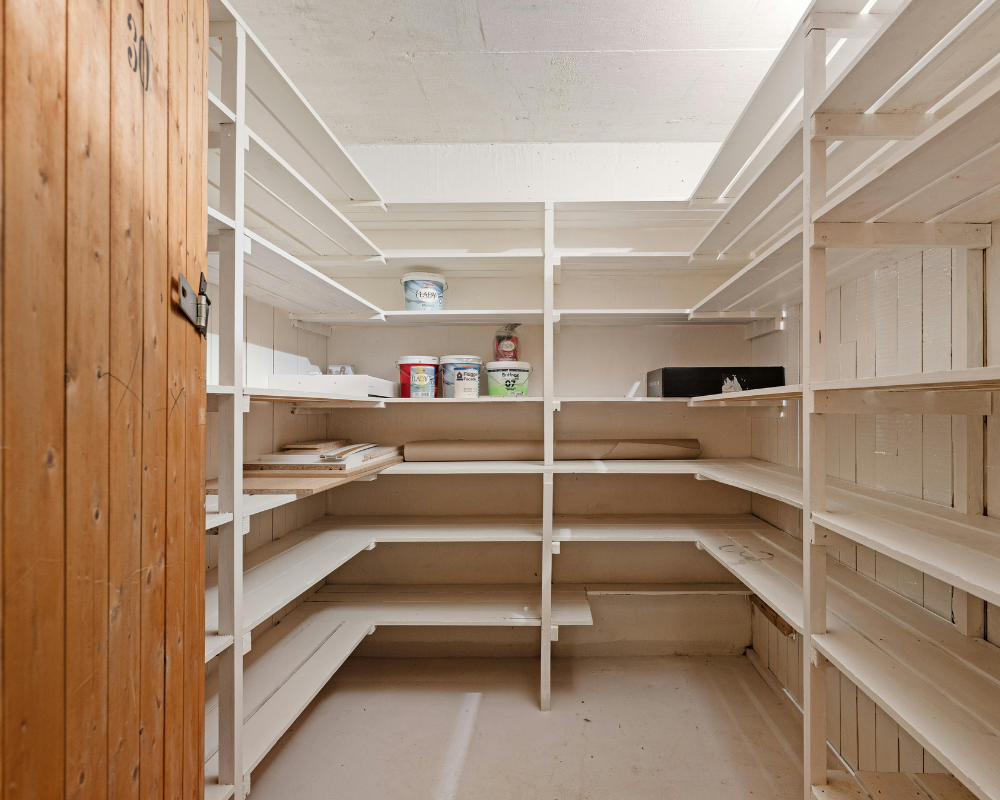
Best Pantry Cabinet Systems for Small Kitchens: 5 Space-Saving Picks
Table of Contents
A small kitchen doesn’t always need more cabinets. Sometimes it needs one better cabinet.
A tall pantry system can turn an unused stretch of wall into storage for dry goods, cookware, small appliances, dishes, and everyday kitchen supplies. The best designs use height rather than excessive floor space, while adjustable shelves and drawers keep you from stacking everything into one hard-to-reach pile.
For this guide, we’ve focused on larger, more substantial pantry cabinets from Amazon that can replace several smaller organizers at once.
Below are five of the best pantry cabinet systems for small kitchens, from narrow enclosed storage to full hutch-style setups with countertops and built-in power.
⭐ Our Top Pick
Sauder HomePlus Kitchen Storage Pantry Cabinet
A relatively narrow pantry cabinet with flexible hidden storage
The Sauder HomePlus Kitchen Storage Pantry Cabinet is our top pick for a small kitchen because it offers a lot of enclosed storage without requiring the 45- to 55-inch width of many larger kitchen hutches.
At approximately 35.4 inches wide, 17 inches deep, and 71.1 inches high, it makes much better use of vertical space than adding another low sideboard or shelving unit.
Inside, adjustable shelves let you change the spacing for cereal boxes, canned food, cookware, small appliances, or serving dishes. It also has a swing-out storage door, giving you additional shallow storage without making the main cabinet dramatically deeper.
The door can be configured to open from either side, which is particularly useful in a small kitchen where door clearance matters.
5 Pantry Cabinets for Small Kitchens at a Glance
| Pantry Cabinet | Size | Storage Style | Best For | Price |
|---|---|---|---|---|
| Sauder HomePlus Pantry Cabinet ⭐ | 35.4″W × 17″D × 71.1″H | Enclosed adjustable shelves + swing-door storage | Smaller kitchens & flexible storage | $$$ |
| HOSTACK 75.4-Inch Pantry Cabinet | 47.2″W × 15.75″D × 75.4″H | Cabinets + drawers + appliance counter | Maximum vertical storage | $$$$ |
| HIFIT 71-Inch LED Pantry Cabinet | 47.2″W × 15″D × 70.9″H | 8 compartments + drawers + counter | Pantry + coffee station | $$$$ |
| HOSTACK 71-Inch Farmhouse Pantry | 41.7″W × 15″D × 70.9″H | 8 compartments + 2 drawers + counter | Appliance and food storage | $$$ |
| HOMCOM 65-Inch Pantry Cabinet | Tall, compact cabinet | 16 door shelves + adjustable shelving | Maximum enclosed food organization | $$$ |
The 5 Best Pantry Cabinet Systems for Small Kitchens
1. Sauder HomePlus Kitchen Storage Pantry Cabinet
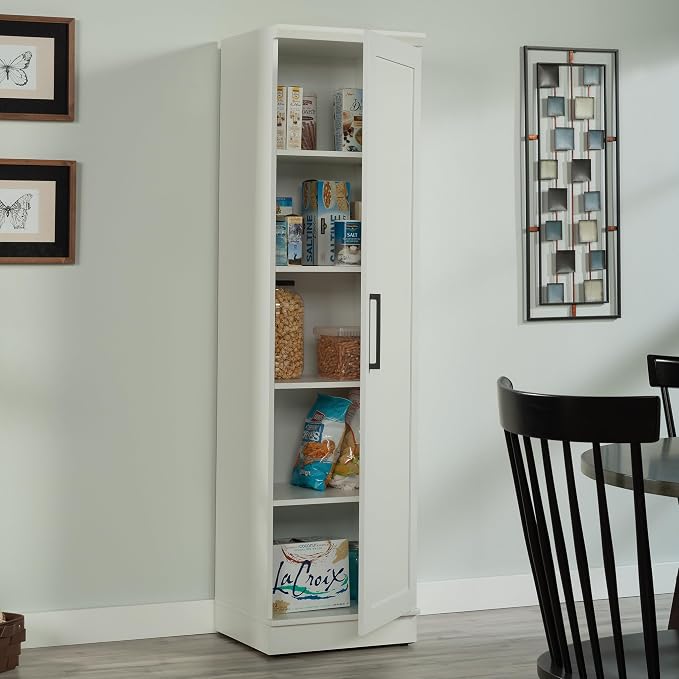
The biggest problem with adding storage to a small kitchen is that the furniture itself can quickly become another obstacle.
The Sauder HomePlus Pantry Cabinet avoids some of that problem with a footprint just over 35 inches wide.
At around 71 inches high, it uses the wall vertically instead of spreading storage across several shorter cabinets.
The interior uses adjustable shelving, so you’re not forced into fixed-height compartments. Tall cereal boxes can share the cabinet with canned goods, mixers, cookware, or serving dishes simply by changing the shelf positions.
One of its more unusual features is the swing-out door storage. It works a little like a shallow secondary pantry, giving smaller bottles, jars, spices, and packages their own space while keeping the deeper central shelves available for larger items.
The door can also be installed to open left or right. That sounds minor until you’re trying to fit a cabinet between a refrigerator, doorway, and kitchen counter.
Adjustable base levelers help compensate for slightly uneven floors, and cord access gives you the option of storing an appliance inside where appropriate.
Best for: Small and medium kitchens that need substantial enclosed pantry storage without an extra-wide hutch.
2. HOSTACK 75.4-Inch Kitchen Pantry Cabinet with Charging Station
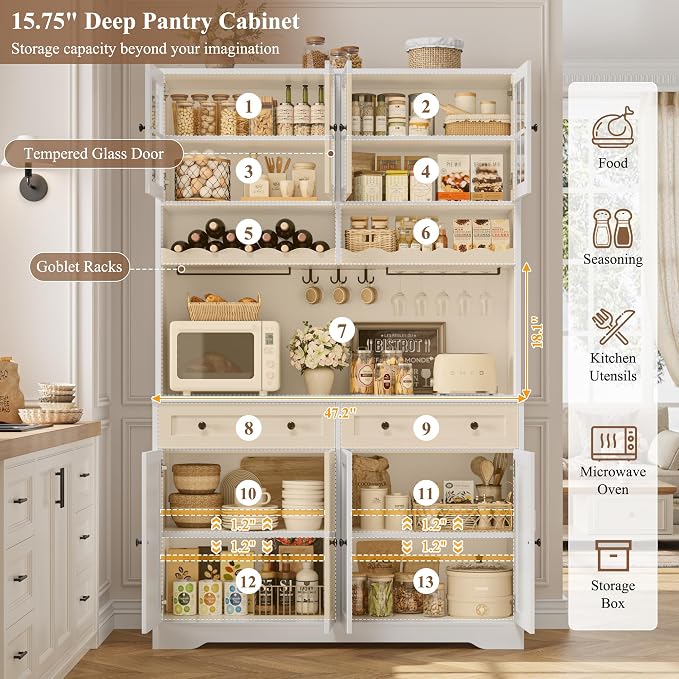
If you have enough wall width for a larger unit, the HOSTACK 75.4-Inch Pantry Cabinet can replace several pieces of kitchen furniture at once.
It measures about 47.2 inches wide but only 15.75 inches deep, which is important. Although it isn’t narrow, its relatively shallow profile allows it to provide substantial storage without projecting as far into the room as deeper freestanding cabinets.
The upper section has four glass doors, while the lower section provides another four doors with adjustable shelving. Between them is a nearly four-foot-wide countertop.
That open counter can become a permanent home for a microwave, coffee maker, toaster, or other appliance that would otherwise take up valuable kitchen worktop space.
Two deep drawers give smaller items somewhere to go instead of disappearing into large cabinet shelves.
There are also dedicated wine racks, mug hooks, and stemware storage, so the cabinet works particularly well if your small kitchen is currently trying to accommodate a separate pantry, coffee bar, and drinks cabinet.
A built-in charging station adds two AC outlets and USB connections, which helps keep appliance cords concentrated in one zone.
At over 75 inches high, it uses vertical space aggressively — exactly what you want when floor space is limited.
Best for: Kitchens with limited built-in cabinetry where one large pantry needs to double as appliance storage and a coffee or drinks station.
3. HIFIT 71-Inch LED Kitchen Pantry Cabinet with Power Outlet
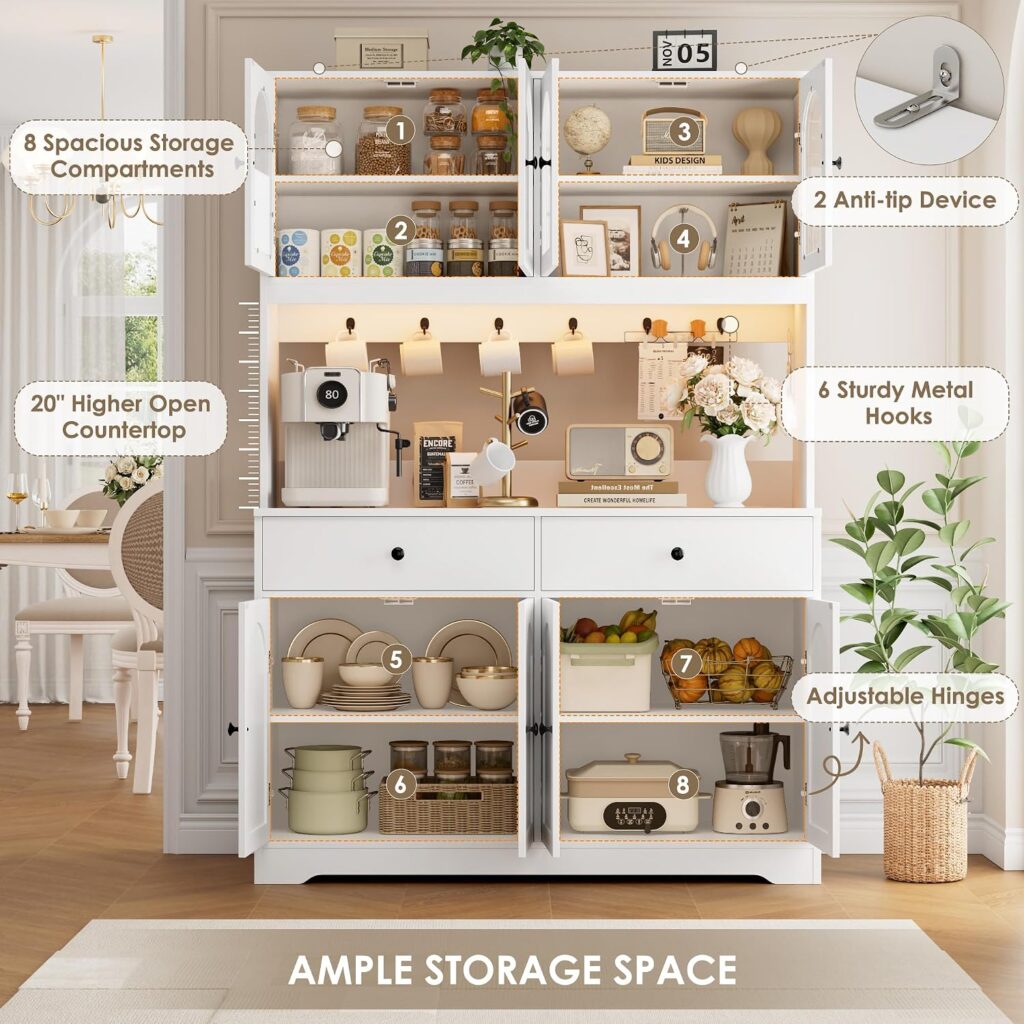
The HIFIT 71-Inch Pantry Cabinet follows a similar hutch-style idea but puts more emphasis on flexible compartments and an appliance station.
It measures approximately 47.2 inches wide, 15 inches deep, and 70.9 inches high.
Inside are eight storage compartments, adjustable shelves, and two large drawers. That gives you several different storage zones rather than one deep cabinet where packets and jars disappear behind each other.
The countertop is particularly useful in a kitchen short on work surfaces. At around 47 inches wide, it can hold a coffee machine, toaster, compact microwave, or a combination of smaller appliances.
A built-in charging station includes two AC outlets and two USB ports, reducing the need to run extra cords across your existing counters.
There are also six hooks underneath the upper section for mugs or utensils.
The integrated RGB lighting isn’t something we’d consider essential to pantry organization, but it can be useful as additional low-level lighting around a coffee or appliance station.
The more important features are the shallow depth, vertical storage, drawers, enclosed cabinets, and countertop — all of which allow the unit to take over jobs that might otherwise require two or three separate pieces.
Best for: Small kitchens where you want pantry storage plus a dedicated coffee or appliance zone.
4. HOSTACK 71-Inch Farmhouse Pantry Cabinet
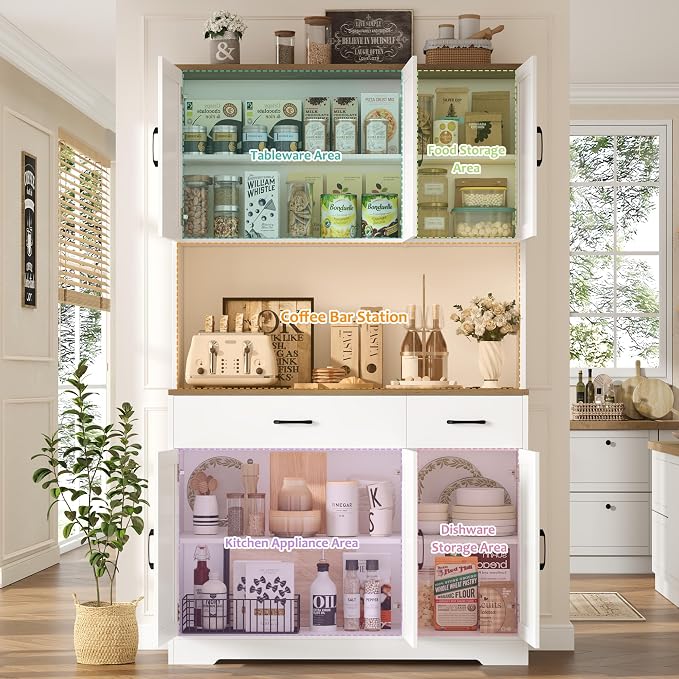
The HOSTACK 71-Inch Pantry Cabinet is a slightly more compact alternative to the larger 75.4-inch HOSTACK system.
It measures about 41.7 inches wide, 15 inches deep, and 70.9 inches high.
That five-inch reduction in width can matter in a small kitchen, particularly if you’re trying to fit a pantry between existing cabinetry and a doorway.
The layout includes eight storage compartments, three adjustable shelves, two large drawers, and a central countertop suitable for a microwave or coffee maker.
There are six doors in total, which means most pantry clutter can stay hidden instead of turning the cabinet into open shelving that constantly needs styling.
The built-in charging station is another practical addition if the countertop becomes an appliance zone.
At only about 15 inches deep, the cabinet stays relatively close to the wall despite offering both enclosed storage and a work surface.
The farmhouse-style doors won’t suit every kitchen, but the overall layout is practical: bulkier objects below, regularly used appliances at counter height, smaller pantry goods above, and drawers for utensils or packets.
Best for: Small kitchens that have around 42 inches of spare wall space and need food storage plus an appliance counter.
5. HOMCOM 65-Inch Kitchen Pantry Cabinet with Door Shelves
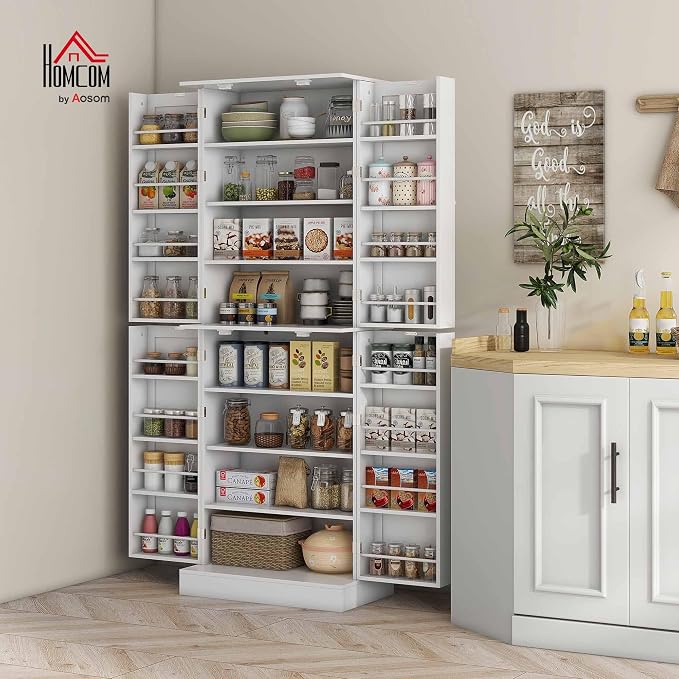
When food organization matters more than creating another appliance counter, the HOMCOM 65-Inch Pantry Cabinet takes a more traditional pantry approach.
Its standout feature is the amount of storage built into the doors.
The four doors contain 16 shallow storage shelves, while the main cabinet provides multiple tiers of adjustable shelving.
Door storage is especially useful in a small kitchen because it separates small jars, bottles, packets, spices, and tins from larger products.
Instead of stacking small items three rows deep on a normal pantry shelf, you can keep frequently used products visible when the doors open.
The main shelves can then be reserved for larger food containers, kitchen appliances, mixing bowls, or bulk purchases.
This type of design can also reduce the temptation to add separate spice racks and countertop organizers later.
The trade-off is that door-mounted storage needs to be loaded thoughtfully. Keep heavier items on the main shelves and use the shallow door racks for lighter pantry goods.
Best for: Kitchens where dry-food organization is the priority and you want lots of smaller items visible rather than buried on deep shelves.
How to Choose a Pantry Cabinet for a Small Kitchen
A small kitchen makes measurements more important than almost any other room.
The cabinet with the most storage isn’t necessarily the one that will work best.
1. Measure the depth first
Width gets most of the attention, but depth often determines whether a freestanding pantry actually feels comfortable.
A cabinet that sticks too far into a narrow kitchen can:
- reduce walking space
- interfere with nearby doors
- block refrigerator access
- make two people passing each other difficult
- make an already-small room feel crowded
Several of the larger hutches in this guide are only around 15–16 inches deep, which helps compensate for their wider footprint.
Before buying, tape the cabinet dimensions onto your floor.
Then open every nearby door — refrigerator, dishwasher, oven, pantry, and room door — and make sure nothing collides.
2. Use height before adding more furniture
Small kitchens usually have more unused vertical space than unused floor space.
A 70- to 75-inch-high pantry can hold substantially more than several small carts and cabinets spread around the room.
Going taller also keeps related items together instead of creating several separate storage zones.
Just remember that tall freestanding furniture should be secured to the wall using the supplied anti-tip hardware.
3. Decide whether you need food storage or appliance storage
Not every pantry should be organized the same way.
If your problem is primarily cereal, tins, jars, pasta, and snacks, choose a cabinet with lots of adjustable enclosed shelving.
If your microwave, coffee machine, toaster, or air fryer is consuming the existing countertop, a hutch-style pantry with an open appliance counter can solve two problems at once.
For extremely small kitchens, reclaiming 30 or 40 inches of main countertop can sometimes be more useful than gaining another closed shelf.
4. Look for adjustable shelves
Fixed shelves often create wasted vertical gaps.
Adjustable shelves let you create shorter sections for tins and jars and taller zones for cereal boxes, appliances, and bulk packages.
They also make the pantry more adaptable over time.
Your storage needs will probably change before the cabinet does.
5. Drawers are useful for the things that disappear
Deep pantry shelves are great for large items but terrible for loose packets and small kitchen tools.
Drawers work particularly well for:
- tea and coffee
- food-storage bags
- napkins
- kitchen linens
- baking accessories
- utensils
- snack packets
- appliance accessories
A cabinet that combines shelves and drawers tends to be easier to keep organized than one made entirely of large open compartments.
Pantry Cabinet vs. Open Shelving: Which Is Better in a Small Kitchen?
Open shelving can make a kitchen feel visually lighter, but it also puts everything on display.
That means every jar, packet, appliance, and box becomes part of the room.
A pantry cabinet is usually the better choice if you want the kitchen to feel calmer because closing the doors removes visual clutter immediately.
Open storage still has a place for attractive or frequently used items.
A good compromise is a pantry cabinet with an open central appliance shelf and closed storage above and below, like the HOSTACK and HIFIT systems.
You keep the coffee maker or microwave accessible without displaying six shelves of groceries.
How Deep Should a Pantry Cabinet Be?
For a freestanding pantry in a small kitchen, around 14–18 inches deep is often a useful range.
It’s deep enough for most food containers, dishes, and many small appliances without projecting as far into the room as standard base cabinetry.
Deeper isn’t always better.
A very deep pantry can actually be harder to use because products disappear behind each other.
For food storage, visibility is often more useful than raw cubic capacity.
Where Should You Put a Freestanding Pantry Cabinet?
Look for underused vertical wall space rather than automatically placing it next to your kitchen cabinets.
Potential locations include:
- beside the refrigerator
- on a short wall near the dining area
- at the end of a cabinet run
- between the kitchen and dining room
- in an unused breakfast nook
- along a wall currently occupied by several smaller storage pieces
Try to keep frequently used pantry food reasonably close to your main preparation area.
If the cabinet will hold a microwave or coffee maker, access to a suitable electrical outlet also matters.
How to Organize a Small Pantry Cabinet
Start by giving each vertical zone a purpose.
One simple layout is:
- Top shelves: bulk refills and rarely used items
- Eye-level shelves: everyday dry foods
- Countertop: microwave or coffee station
- Drawers: utensils, tea, packets, linens
- Lower cabinets: appliances, cookware, heavy food containers
- Door racks: spices, bottles, sauces, small packets
Keep heavier items lower and lighter products higher. The biggest mistake is filling every shelf completely.
Also, leave enough empty room to remove an item without dismantling the entire cabinet.
FAQ
Do Pantry Cabinets Need to Be Anchored to the Wall?
Tall freestanding pantry cabinets should generally be anchored using the anti-tip hardware supplied with the furniture.
A pantry becomes increasingly top-heavy as shelves and doors are loaded.
Opening multiple doors or drawers can also shift the centre of gravity forward.
Follow the manufacturer’s wall-anchoring instructions rather than relying only on the cabinet’s own weight to keep it stable.
Is a Pantry Cabinet Worth It in a Small Kitchen?
Yes — if it replaces clutter rather than simply adding more furniture.
A pantry cabinet makes the most sense when it allows you to remove several smaller storage solutions, clear the countertops, or free up existing kitchen cabinets for cookware.
The useful question isn’t:
“How much can this cabinet hold?”
It’s:
“What can I remove from the kitchen once this cabinet is here?”
If one tall pantry replaces a microwave cart, countertop organizers, food baskets, and an extra shelving unit, it can make a small kitchen feel considerably larger even though you’ve technically added another piece of furniture.
Bottom Line
For most small kitchens, the Sauder HomePlus Pantry Cabinet is our best overall choice. Its roughly 35-inch width is more manageable than a full kitchen hutch, while adjustable shelves and swing-door storage make good use of the space inside.
If you have a wider stretch of wall and want one piece of furniture to replace both pantry storage and an appliance station, the HOSTACK 75.4-Inch Pantry Cabinet gives you cabinets, drawers, a large countertop, and built-in power in one system.
The HIFIT 71-Inch Pantry is another strong choice when you want a dedicated coffee or microwave zone, while the more compact HOSTACK 71-Inch Pantry saves several inches of width.
And if the biggest problem is simply keeping dozens of small pantry items visible, the HOMCOM Pantry Cabinet uses door-mounted storage to make better use of otherwise wasted space.
The best pantry system isn’t necessarily the biggest one you can squeeze into the room. It’s the cabinet that lets you remove the most clutter while using the least valuable floor space.
This article contains affiliate links. If you buy through our links, we may earn a commission at no extra cost to you.
Related Reads


You May Also Like
How Do I Choose Pantry Storage Containers?

Mindful Meal Prep: Sustainable Pantry Staples for Healthy Cooking